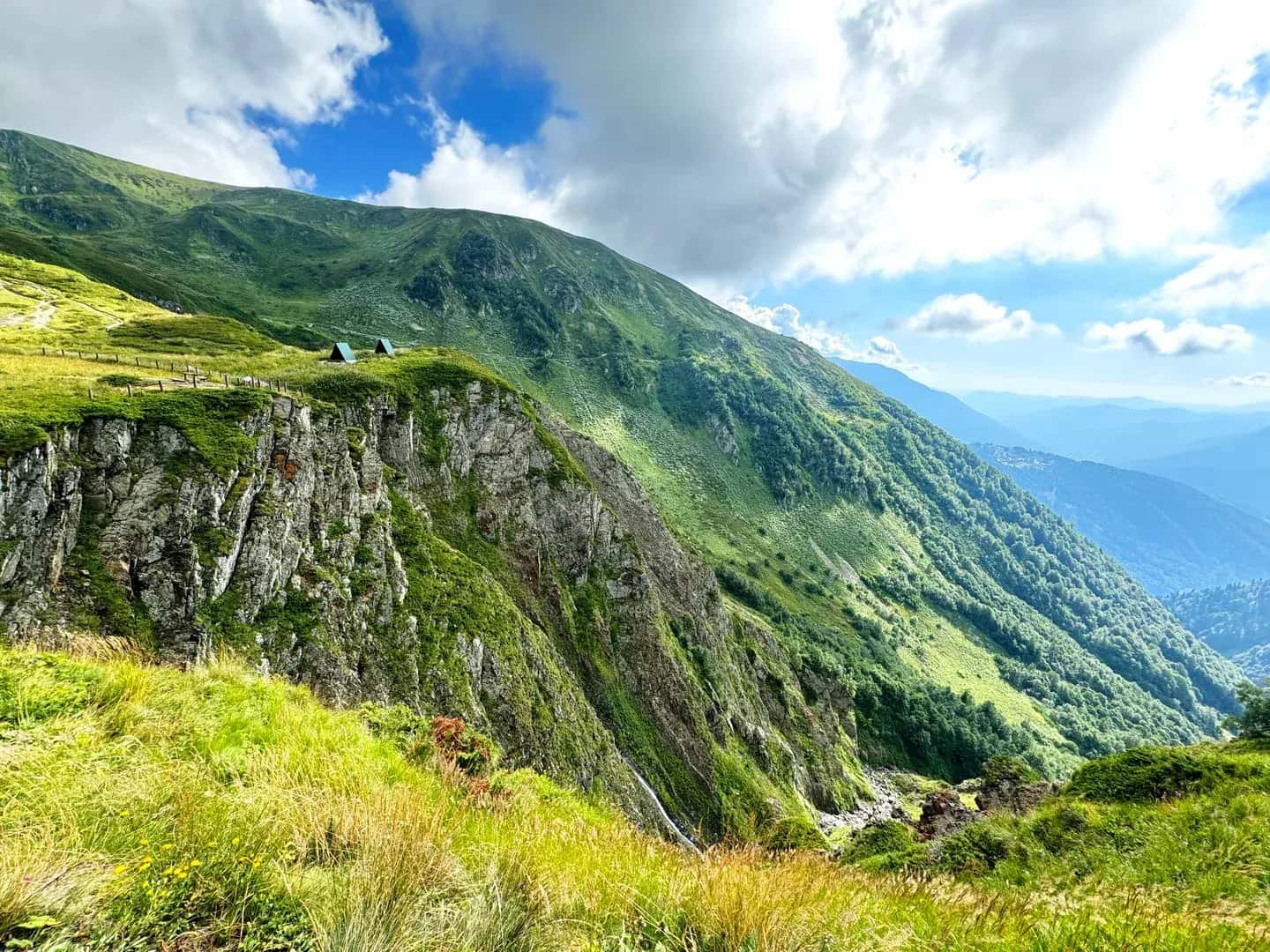
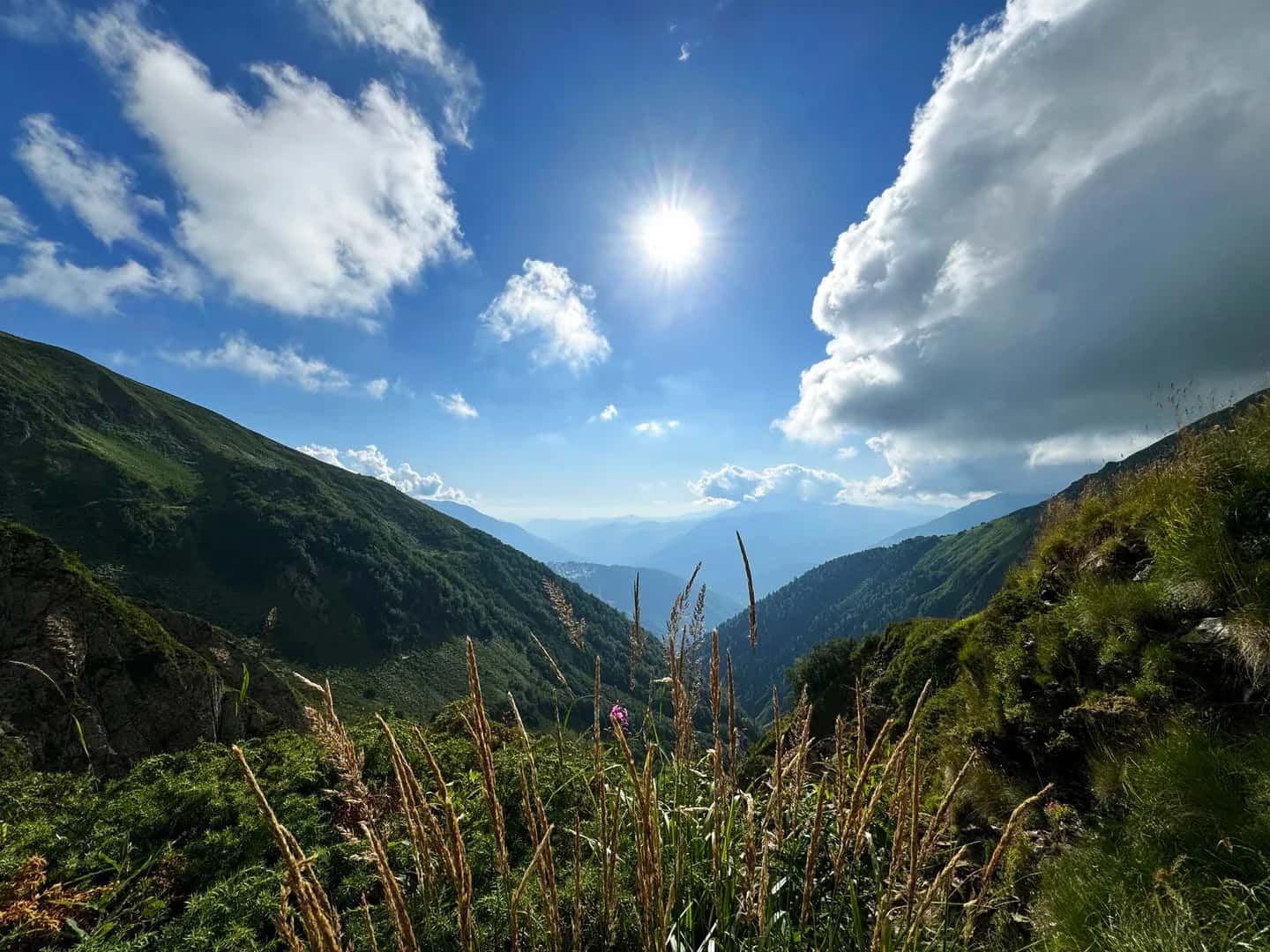
The history of this place is shorter than Elbrus's, but denser than it seems. There's the country's oldest reserve, the echo of war, and the work of local historians who coined half the names around here. The guiding rule of this piece: only what the sources confirm. Where there's no source, we honestly keep quiet rather than invent a legend.
The reserve: since 1924
The cornice lies within the Caucasus State Nature Biosphere Reserve, founded in 1924 - one of the oldest protected areas in Russia. Since 1999 the reserve has been on the UNESCO World Heritage list under the name "Western Caucasus".
It's precisely the reserve status that explains why the cornice has come down to us almost untouched: the meadows, the animals and the views here are the same as a hundred years ago. What that means for a visitor today is in the article on the reserve's rules.
Where the name "Bzerpi" comes from
The name is ancient and disputed. By one version, "Bzerpi" comes from the Ubykh "bzepi" - something like "place by the water", "where there is much water". By another - from the Adyghe bzadzhe, "wicked, harmful", that is, a "harsh, unwelcoming place". And there's a third guess: that this was the name of one of the local (Abaza) highland peoples.
An important detail: Bzerpi is first of all a river, a tributary of the Laura. The water got the name first, and only then the massif, the plateau and the cornice itself. So the "watery" version of the name looks logical.
The neighbouring Psekhako ridge (more correctly Psekokho) is "watery" too: it's traced either to the Abkhaz "psa-kua-khuy" - "summit of the fir ridge" - or to the Adyghe "psikekhokh" - "falling water", a waterfall. Water is woven into the names of the whole district.
Who named the peaks
Many of the names here are not "from the depths of the ages" but quite authored, of the 20th century. Bzerpi Peak (2,482 m) was named in the 1930s by the local historian and writer Yuri Yefremov, an explorer of Krasnaya Polyana. His too is the name of the neighbouring peak, the Black Pyramid (2,375 m), a "gloomy" pyramidal mountain.
This is a typical story for the Caucasus: ancient, "folk" place names (often tied to water or to the character of a place) sit alongside names given by the explorers and local historians of the last century as they put the mountains on the map.
Quick quiz: history and names

The echo of war: the obelisk beyond the cornice
The most powerful page in the history of these parts is the wartime one. If you go on past the cornice, towards the Pseashkho pass and Kholodny Camp, an Obelisk of Glory to those who fought in the Great Patriotic War stands on the route. This is not a "tick-box sight" - there really was fighting here.
In 1942–1943, during the Battle of the Caucasus, the German command tried to break through these passes to the Black Sea coast. Among the attackers was the elite "Edelweiss" mountain division - specially trained alpine riflemen. The line was held by soldiers of the 20th Mountain Rifle Division - and they did not let the enemy through.
"Here, in 1942–1943, during the Battle of the Caucasus, soldiers of the 20th Mountain Rifle Division held the defence of the Caucasus and did not let the elite 'Edelweiss' alpine units reach the Black Sea coast."- inscription at the obelisk, per local-history sources
It's worth remembering this as you set out on an easy "stroll with a view": the same snowfields, wind and cliffs we admire were, eighty years ago, the front line. The obelisk itself and the way to it are already beyond the single-day route; what exactly lies beyond the cornice we cover in the article on nearby places.
How people came to walk here
The sources don't give an exact date for a "first ascent" of the cornice - and there essentially isn't one: this isn't a peak but an accessible edge of the plateau, onto which shepherds, hunters and the first explorers stepped long before the tourists. As Krasnaya Polyana became a mountain resort and cable cars appeared on the slopes, the cornice turned into what it is today - one of the most visited places in the protected zone.
Today you can ride a cable car up and walk here in a day. A hundred years ago it was an expedition. But the views from the cliff are the same. They're where you should begin your acquaintance with the place: the article "What the Bzerpinsky cornice is" is exactly about that.