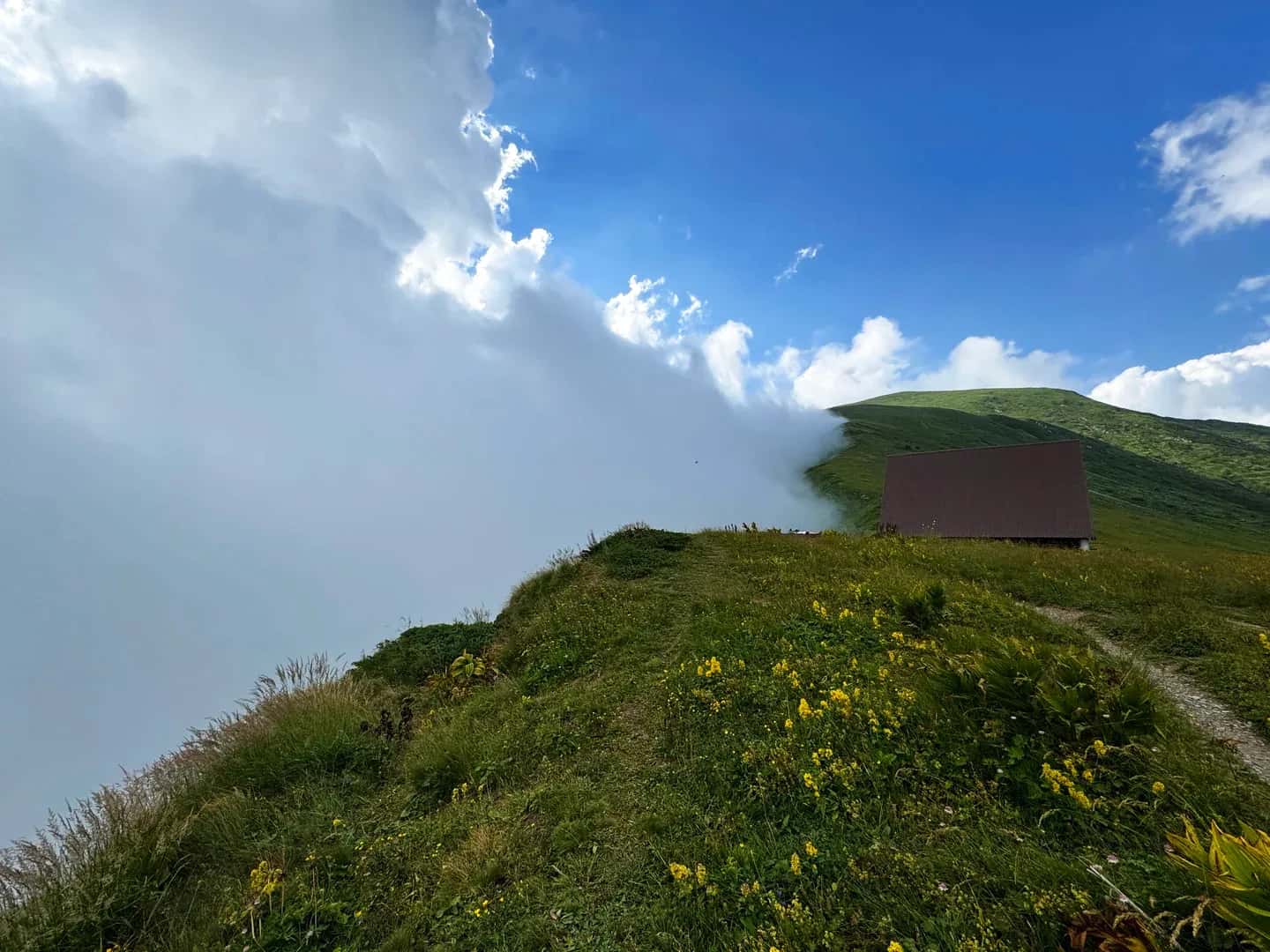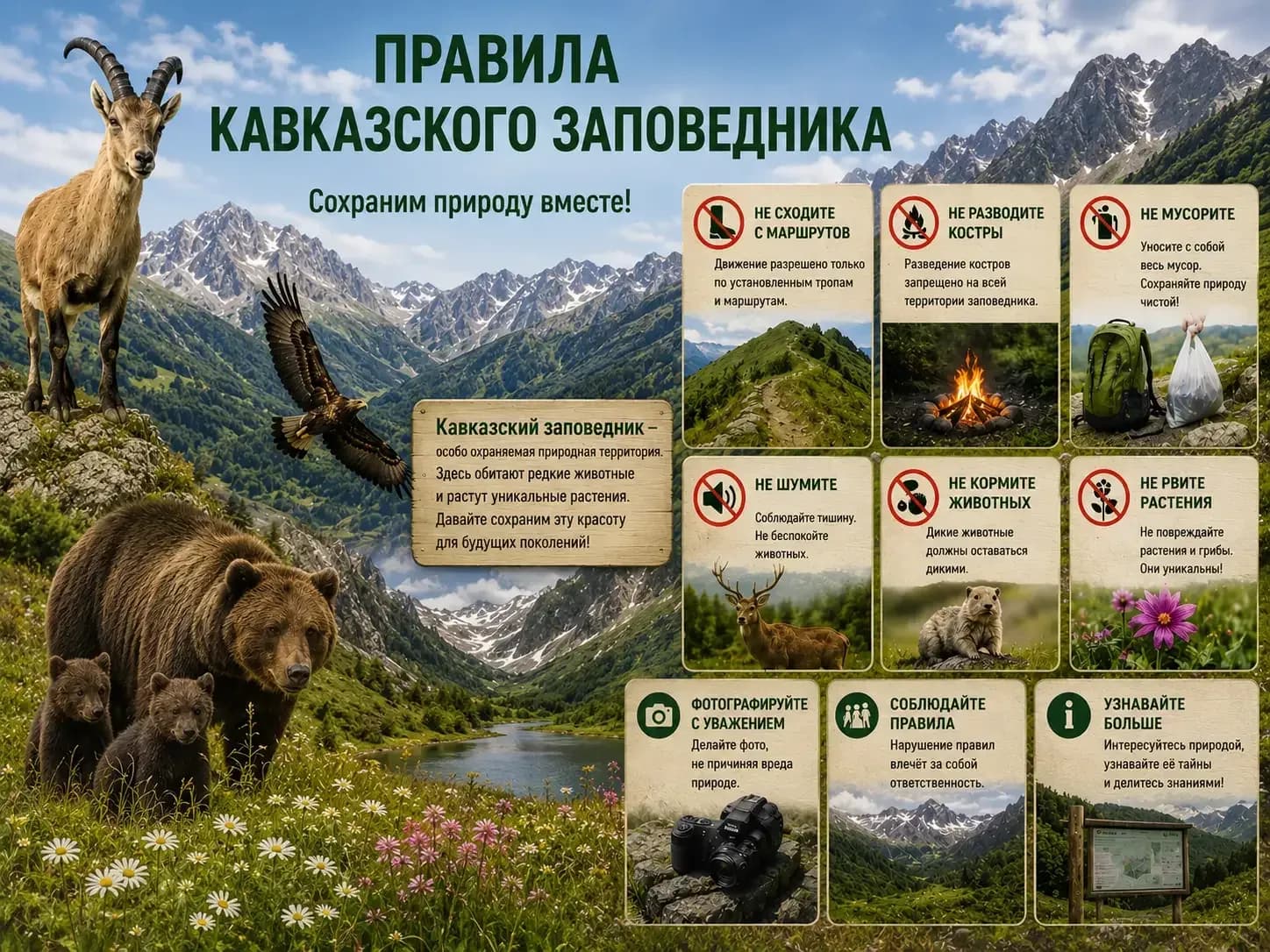
The Bzerpinsky cornice is not just a cliff edge with a view of the mountains. It sits inside the Caucasus State Nature Biosphere Reserve, one of the oldest and strictest protected areas in Russia and a UNESCO World Heritage site. The regime here is that of a strict reserve, not a park: the rules are tighter than hikers are used to.
Most of the trouble on this route begins not on the trail but at home - when someone hasn't arranged a permit, arrives out of season, or brings a dog. So let's go through the rules before you set off, in order.
Why you need permits (there are two)
A subtlety few people mention: the route crosses two different regimes, and you need two permits. First, from the Pikhtovy shelter to the Bear Gate tract, the trail runs through the forest zone of Sochi National Park - this is transit, and it costs 300 ₽ per day. Beyond that the Caucasus Reserve itself begins - and that is a separate permit.
The reserve permit is arranged in advance on the official site kgpbz.ru. The price in 2026 is 500 ₽ for the first day and 300 ₽ for each day after. This is not a formality: the permit regulates the load on a fragile ecosystem and helps rescuers know who is out on the trail.
Everything is counted by the day, and each day is a new entry. In round numbers it works out like this: a single-day outing - about 800 ₽ (national park 300 + reserve 500). A two-day trip with an overnight is reserve 500 + 300 plus national park 300 + 300, because the transit and the entry are charged afresh each day. It's worth arranging 2–3 days ahead: don't count on a booth "on site".
Permits aren't only checked at the entrance. Reserve inspectors patrol the routes, and being caught without one ends, at the least, in being turned back, and at worst in a report and a fine. Keep it (on paper or on your phone) close to hand.
Why you can't bring a dog
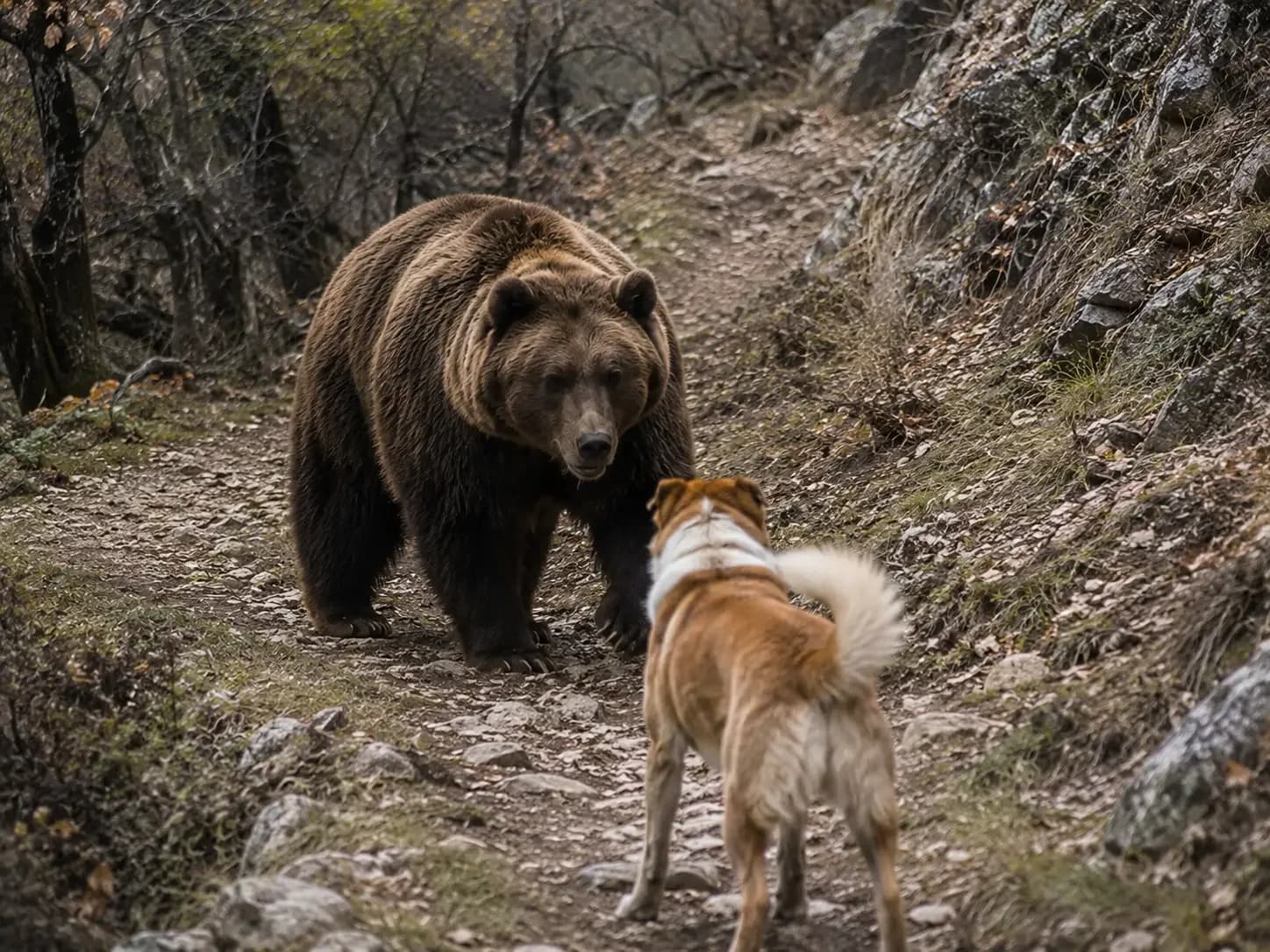
The most common and most painful rule for hikers: pets are forbidden in the reserve. No dogs, cats or other animals - not even on a lead, not even small ones, not even "very well-behaved" ones.
The reason is twofold. First, a dog is stress and a source of infection for the wild fauna: chamois, tur and birds react to a predator even when it's on a lead. Second, it's dangerous for the pet itself: a meeting with a bear or a jackal at 2,000 m ends badly for a dog. Leave the animal at home or at your hotel.
Campfires, litter and the trail
Three rules that keep the reserve a reserve:
Campfires are forbidden. Completely. For hot food and tea - a gas stove only. The subalpine soil is peaty, and the dry grass and juniper catch in an instant; up at altitude there is next to nothing to put a fire out with.
Carry out all your litter. Including organic waste: cores and peelings. At altitude they take months to rot down, and meanwhile they teach the animals (foxes and bears among them) to approach people for food - which ends badly both for the animal and for the next hiker.
Don't leave the trail. The route is laid out so as not to trample the meadows or disturb the animals. "Cutting" across a slope or scrambling to the cliff edge for a shot is a violation and, at the same time, the main source of accidents (more on that in the article on trail hazards).
Quick quiz: rules of the reserve

The season: why from 16 June
The reserve's hiking routes in this area open from 16 June and run until late October. Before mid-June the upper sections of the trail are blocked by snowfields, and melting snow and meltwater make the slopes dangerous.
So there's no point planning the cornice for May: even if it's already warm down in Krasnaya Polyana, snow still lies up top. How the route changes from June to October we cover separately in the article on the seasons on the cornice.
"A reserve is a territory where nature matters more than people. Here the visitor is a guest and is obliged to respect the regime: permit, trail, no fire, no litter and no animals."- from the visitor rules of the Caucasus Nature Reserve, kgpbz.ru
How to get there and where the reserve begins
The route starts from Gazprom Alpika (the lower cable-car station, Esto-Sadok). A single cable car with no changes lifts you to the Pikhtovy shelter, and from there it's on foot along the trail. The cable-car timetable is at polyanaski.ru; the Alpika cable car down runs until 17:30, the backup is via Gazprom Laura until 19:00, and you need to plan your time around that.
The reserve boundary runs above the resort zone - where the ski runs end. Officially the walking route to the cornice is listed as No. 8A "Bear Gate tract - Bzerpinsky cornice - Kholodny Camp": it starts at the Bear Gate tract (1,890 m), follows the flank of Mount Tabunnaya (2,351 m) to the cornice at around 2,063 m (about 2.5 km from the Bear Gate); the full No. 8A route to Kholodny Camp is about 10 km. From that point on, all the rules described above apply. If you'd like to walk the route with a guide, that's a matter for the tour operators at sochiguides.ru; here we only cover how the place itself works.
The cornice itself has a fitted campsite: alpine huts for overnight stays, tent platforms, tables with benches and a toilet. This is not by chance and it is not a "wild" camp - under the reserve's rules, camping in unauthorised places is forbidden. You may pitch a tent, set up a bivouac and stay overnight only on the prepared sites, and nowhere else.
The Caucasus Reserve was founded in 1924 and today belongs to the UNESCO World Heritage list as "Western Caucasus". This means the strict rules are not local fussiness but international commitments to protect the territory.
What happens if you break the rules
Breaking the regime is not a "telling-off". An inspector has the right to turn you back from the route, file a report and issue a fine; for a fire or damage to nature the consequences are more serious. But it isn't really about the penalties: the rules here are written not for bureaucracy, but so that twenty years from now you can still come up to the cornice and see the same meadow, the same chamois and the same view.
A short checklist before you set off: permit arranged, not May, no pet, stove instead of a fire, a bag for litter, don't leave the trail. That's enough for a day on the cornice to go right.