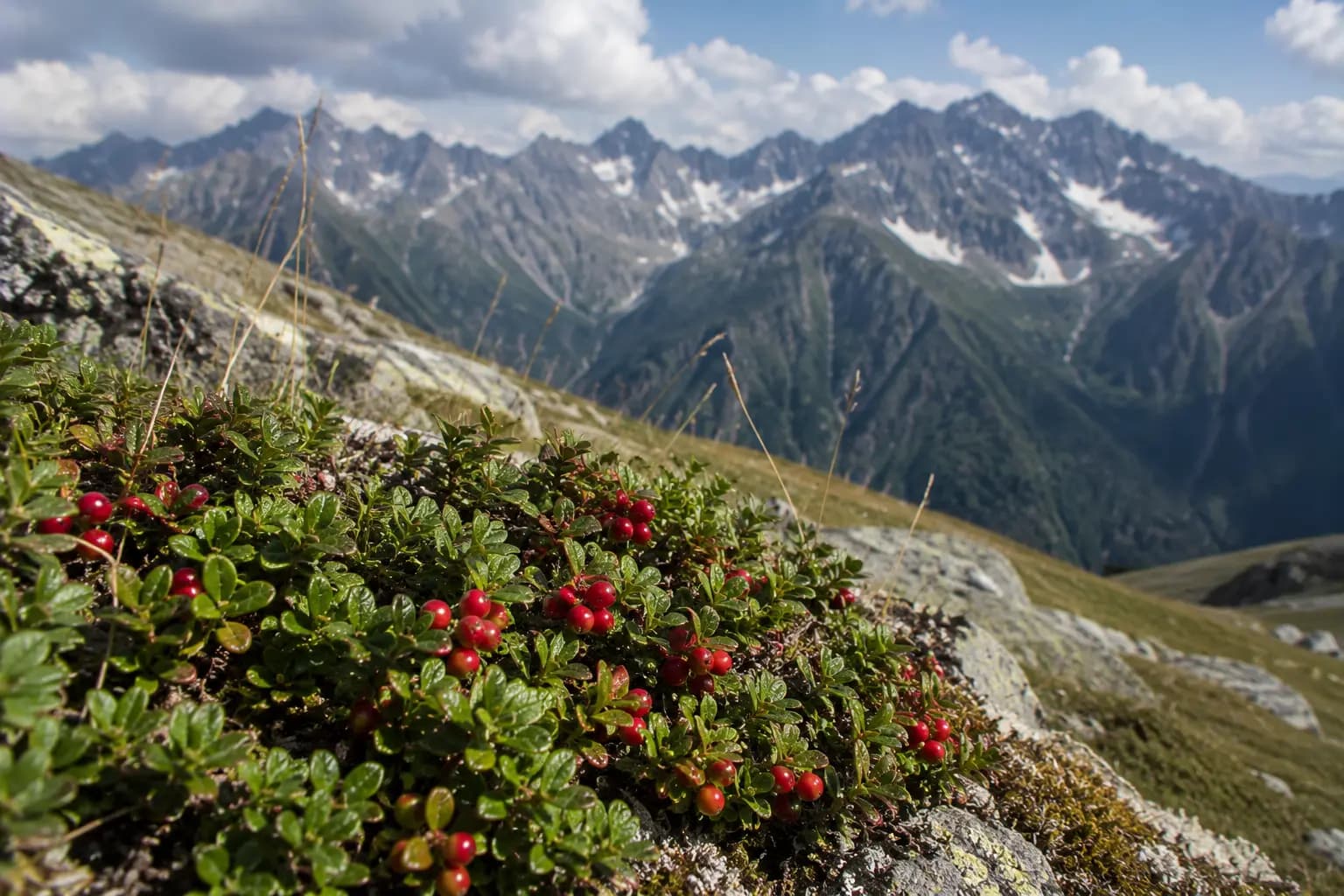
When the summer meadows finish flowering, the subalpine cornice does not empty - it begins to bear fruit. By late August the slopes by the cliff (and that is 2,063 m up) turn blue and red in places with berries. The most conspicuous are the bilberry and the lingonberry, and they grow right in the rhododendron thickets.
Bilberry and lingonberry - the main berries of the subalpine zone
In the subalpine belt, among the rhododendrons, grows the northern low-growing bilberry - by late summer its little twigs are covered with blue-black sweet berries. Beside it the lingonberry reddens: its round red berries ripen by late August. Both ripen at roughly the same time, in August and September - this is the “berry” peak of the cornice season.
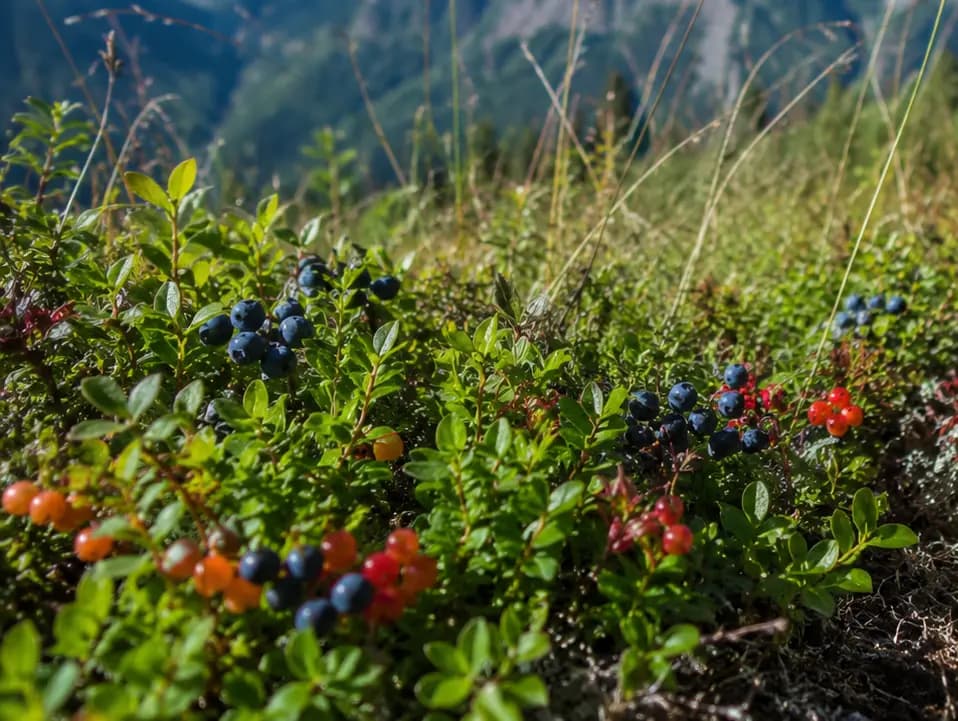
Lower down, in the mountain forests, there also grows the Caucasian blueberry - a tall shrub whose leaves the locals have long brewed in place of tea. That is how it earned the name “Caucasian tea.”
What else grows higher up
The subalpine berries are not the end of the list. In the high country you will find fragrant raspberry, pleasantly tart stone bramble, high-mountain currant and even bird cherry. And the autumn forest just below is decked with the flame-red clusters of the rowan. There are mushrooms too - the same russulas that foxes are happy to make a meal of.
Not everything red is edible
An important caveat: not every bright berry is safe. The reserve has its share of poisonous plants too - for example daphne berries (mezereon) and others. So you must not, even in theory, taste anything unfamiliar “by eye”: a mistake with a wild berry can cost you your health.
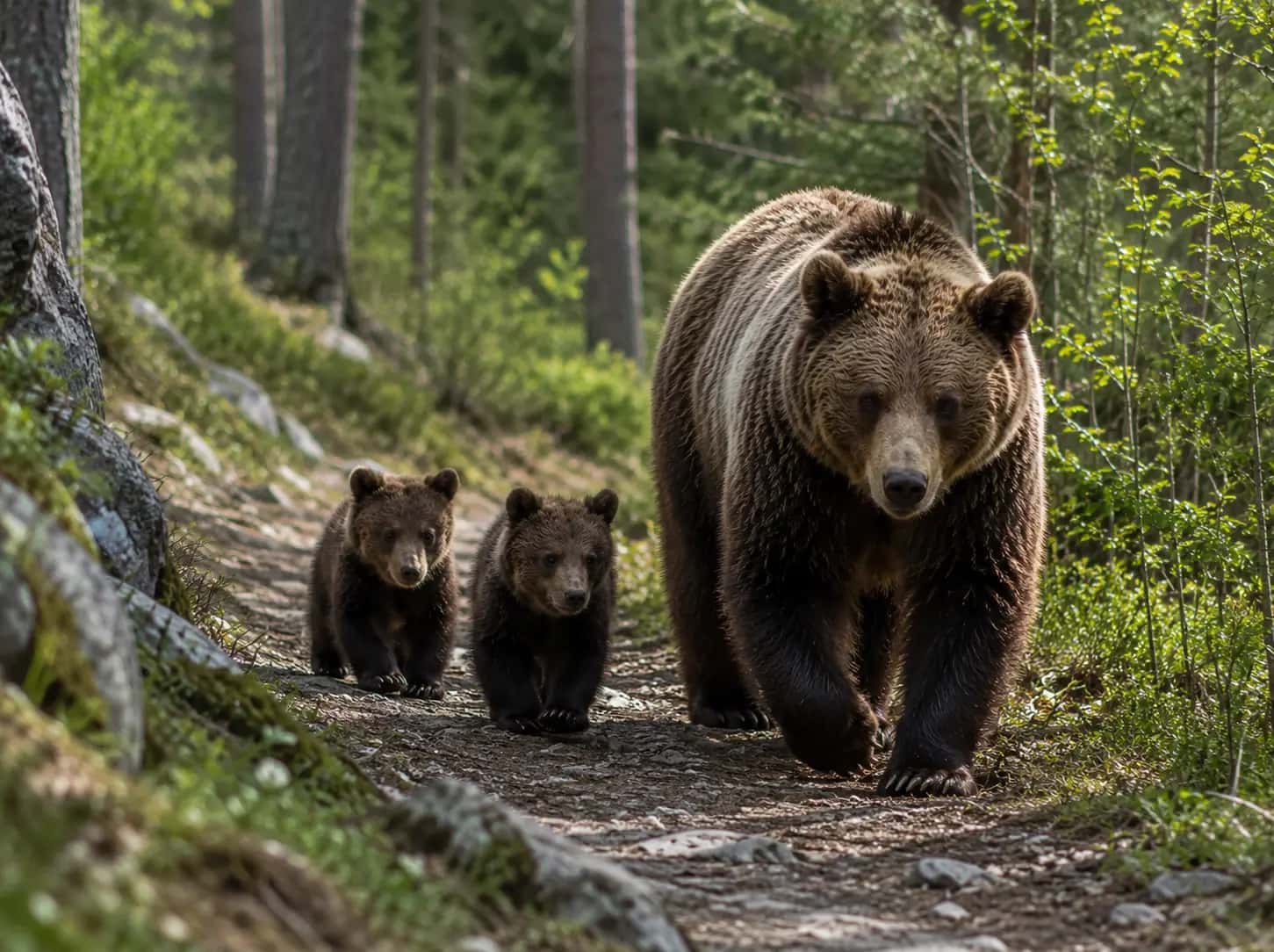
“September and October are the time when all manner of seeds and fruit ripen. The master of the forest, the bear, is especially fond of the autumn berries and fruit.”- Caucasus Nature Biosphere Reserve
Quick quiz: berries of the cornice

Who feasts in autumn
These berries are not a tourist’s dessert but the mainstay of the autumn table for the animals. The bear builds up fat on them before hibernation, the fox adds bilberries and lingonberries to its diet of mice, and the birds feed on the fruit before drifting down to the valleys. Every handful picked by a person is forage taken from someone who needs it for the winter.
Why gathering is forbidden
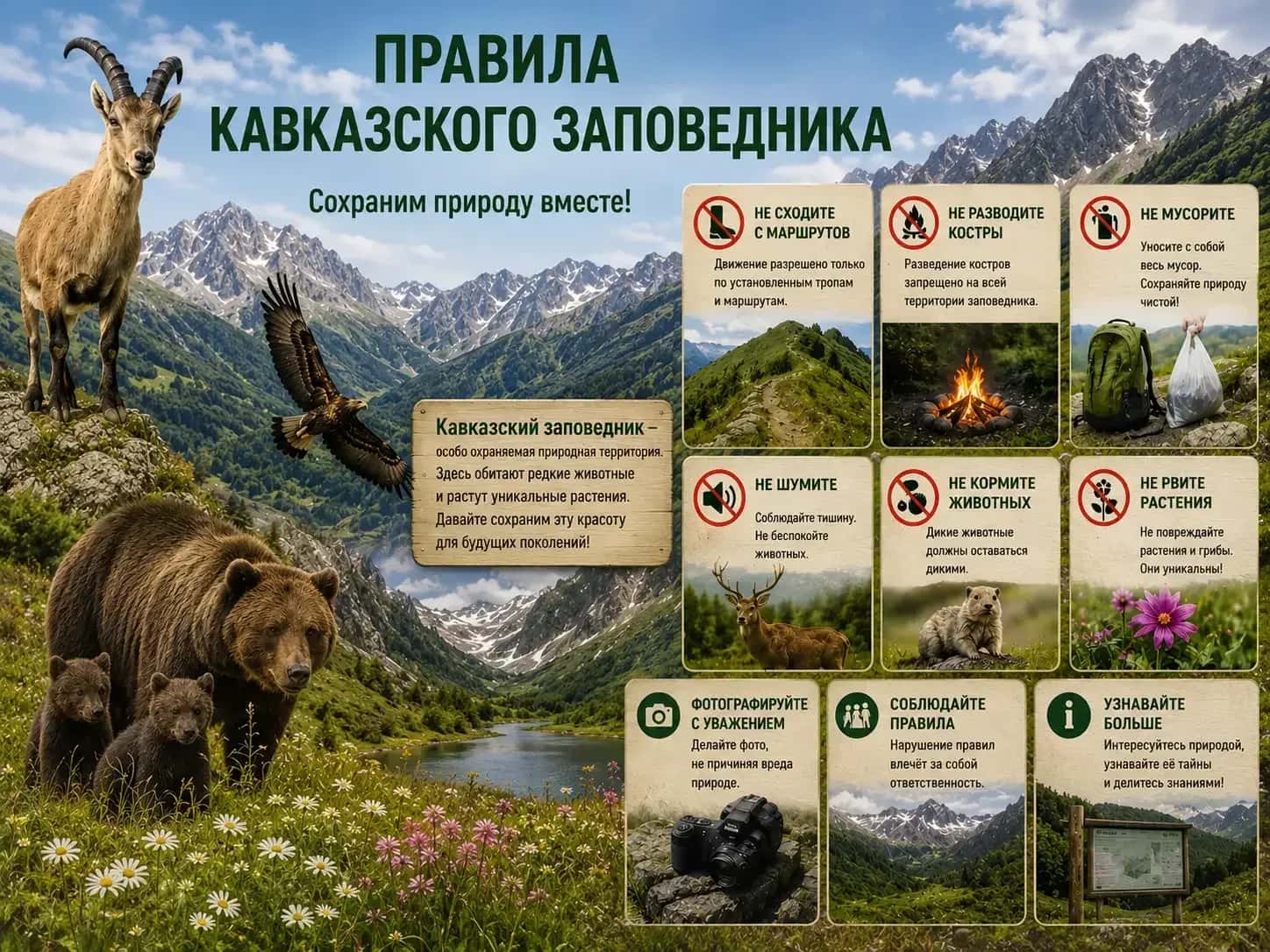
And here is the main rule. The Bzerpinsky cornice lies within the Caucasus Nature Biosphere Reserve, and that means a regime of strict protection: here the gathering of any wild produce is forbidden - berries, mushrooms, flowers, nuts. The reserve is not a national park or an open public wood: the rule is simple and without exception, you may not gather even a handful of bilberries.
So the formula for these places is “look, photograph, do not pick.” We leave the berries to the animals, stay on the trail and come without pets. For more on all the restrictions, see the article “Rules of the Caucasus Reserve.”