The Bzerpinsky cornice is a cliff inside the Caucasus Nature Biosphere Reserve, which means everything alive here is protected by default. But some species carry a special status - they are listed in the Red Data Book of Russia or on the IUCN Red List. By the cornice you can meet them more often than you might think.
This article is about the ones you can actually see along the trail, and about what their status means in practice. Spoiler: nothing difficult is asked of you - only attentiveness and restraint.
How many protected species the reserve holds
The reserve’s figures speak for themselves. Among the vertebrates, 25 species are listed in the Red Data Book of Russia and 8 on the IUCN Red List. Counting the invertebrates too, 71 species have made it into the national and regional Red Books. The plant tally is serious as well: 62 species of the reserve’s vascular plants are in the Red Data Book of Russia.
The Caucasus Reserve is one of the foremost conservation areas for rare species across the whole Caucasus. Endemics and relicts make up as much as a third of its flora - so a large part of the region’s “Red Book” richness rests precisely on places like the country around the cornice.
Birds: golden eagle, bearded vulture, grouse
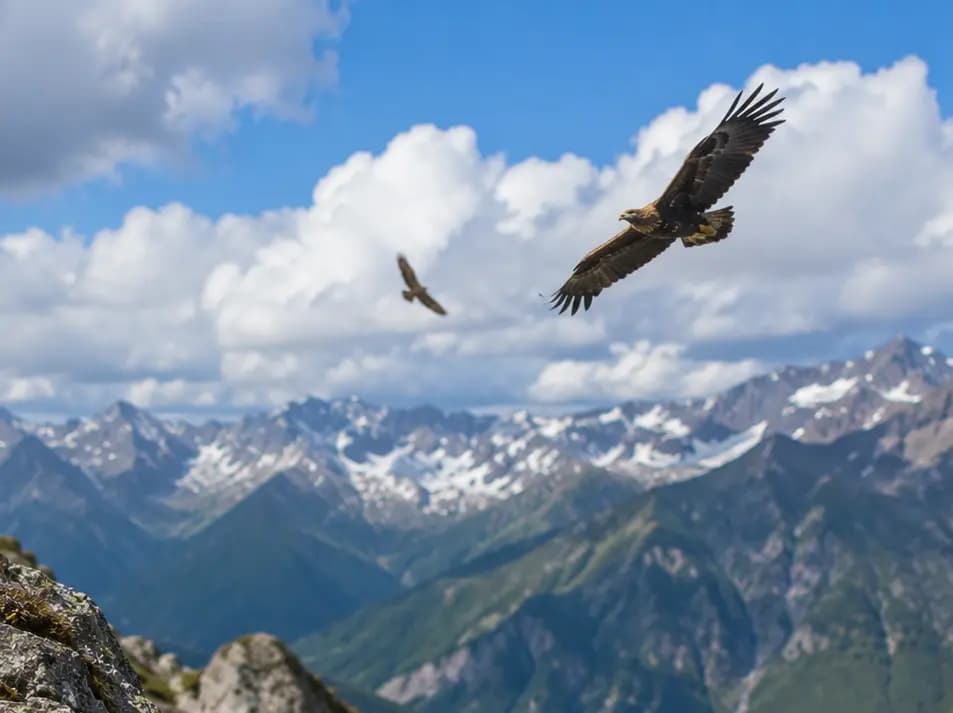
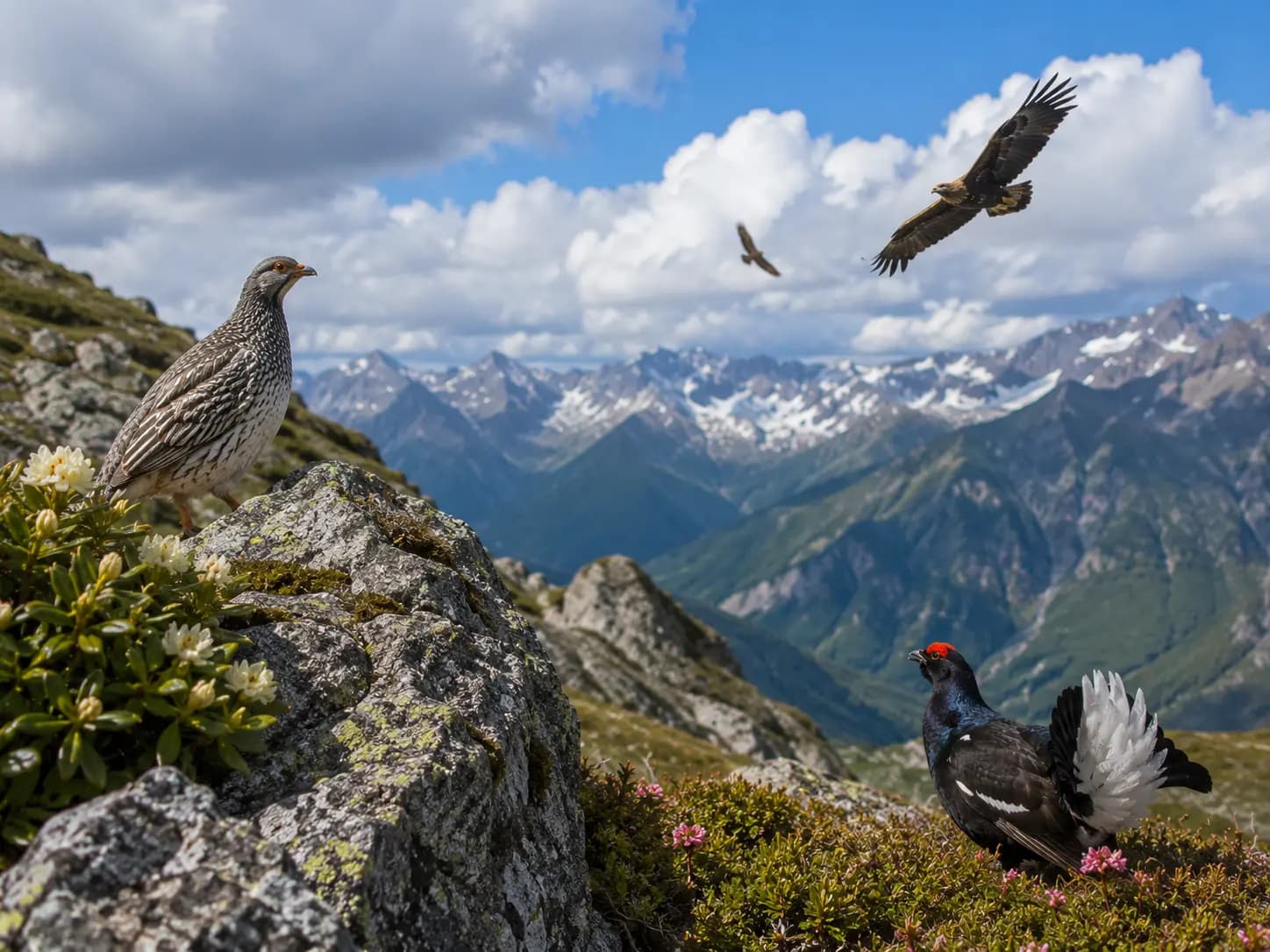
The most conspicuous Red Data Book inhabitants of the cornice are the large birds. The golden eagle (Aquila chrysaetos) is placed in category 3 of the Red Data Book of Russia - a “rare species.” The reserve has several known nests and about four breeding territories, so seeing a golden eagle soaring above the cliff is entirely possible.
Rarer still is the bearded vulture, or lammergeier (Gypaetus barbatus) - also category 3, a rare species at the edge of its range. In all Russia there are only 30–40 pairs. Its wingspan reaches 2.7 m, and it is the only scavenger able to feed even on large bones, tendons and hooves.
“Unlike other scavengers, the bearded vulture can feed even on large bones, tendons, hooves and dry scraps of hide.”- Red Data Book of Russia
And on the meadows themselves and in the rhododendron thickets lives the Caucasian grouse (Lyrurus mlokosiewiczi) - category 3, rare, and at the same time an endemic of the Caucasus and northeastern Turkey: nowhere else in the world does it live. In spring the males hold leks - communal mating “tournaments”; at that time they are especially easy to flush, so people keep away from the lekking grounds.
The tur: an endemic under protection
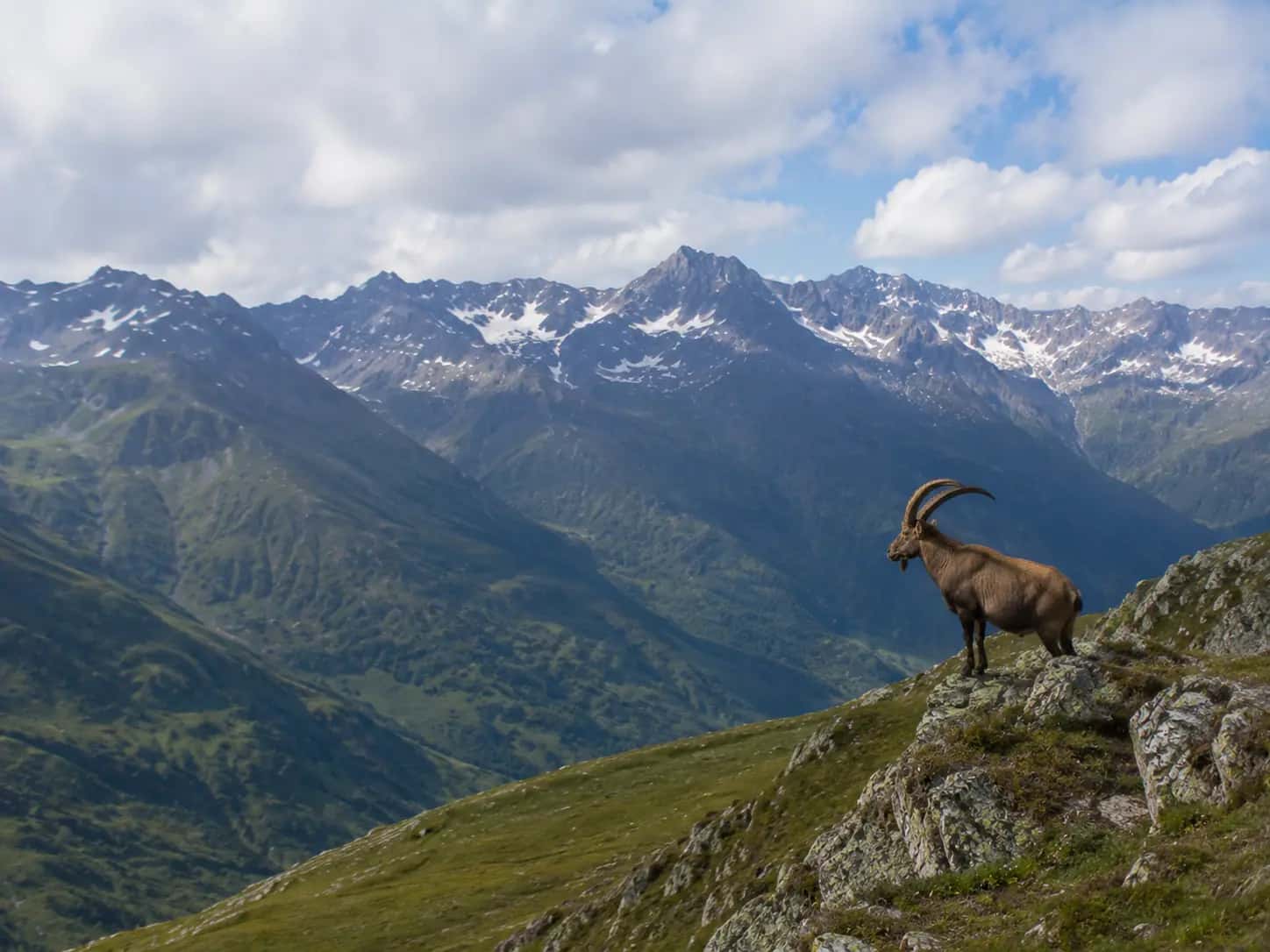
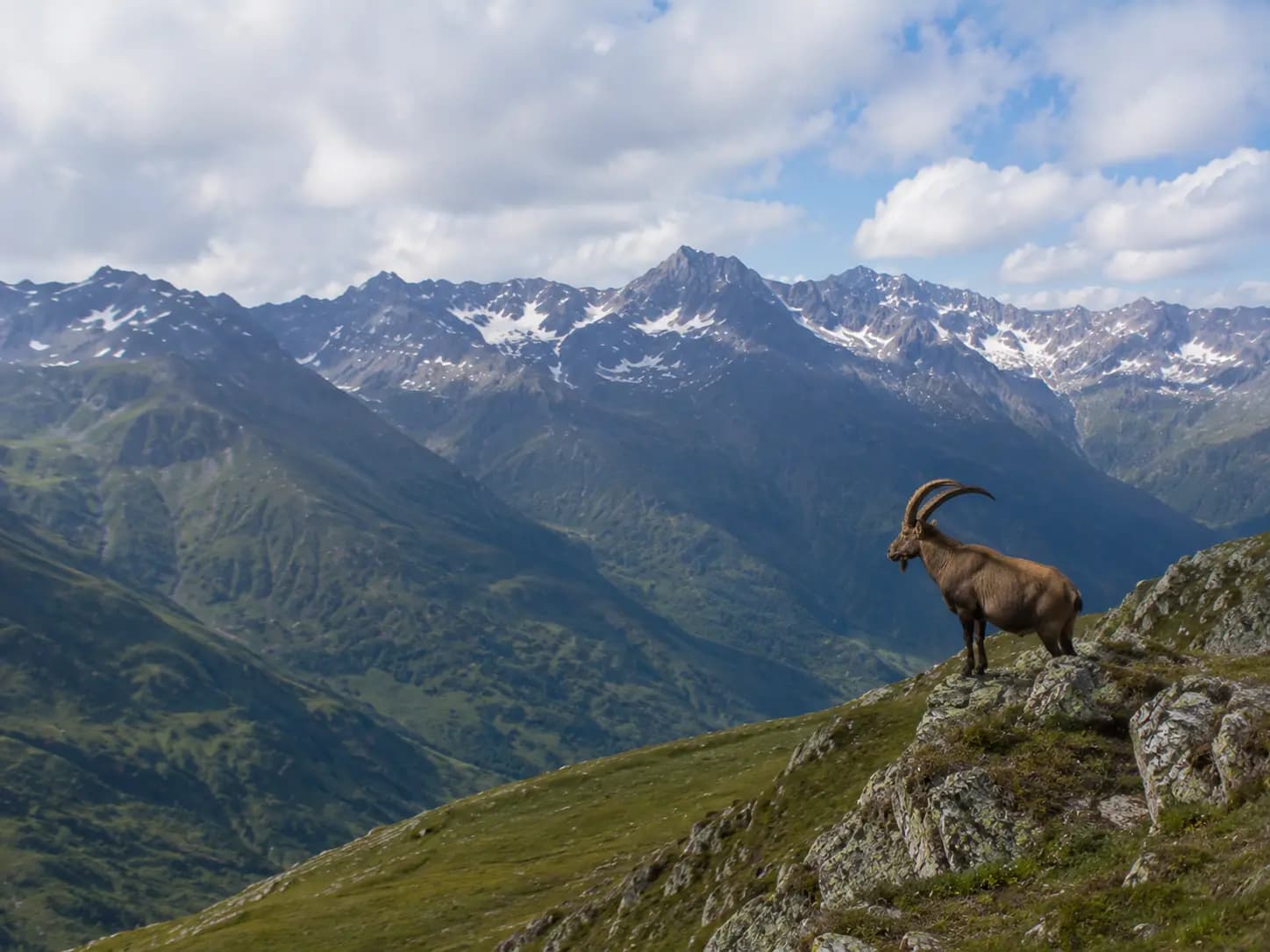
The emblem of these mountains is the West Caucasian tur (Capra caucasica). It is an endemic: in the world it lives only in the North-West Caucasus and nowhere else. On the IUCN Red List it holds the status “Endangered,” and its total number in the wild is estimated at only about 10,000 animals.
For the tur the reserve is a key place of survival: it was here that its numbers were rebuilt after the poaching of the 1990s. For more on the tur’s habits, see the survey of high-mountain wildlife; here one thing matters - this is not “a little mountain goat for a photo” but a species with a rescue story behind it.
Quick quiz: who is protected

Plants: what you must not pick
It is not only the animals and birds that are in the Red Data Book. The best-known protected early bloomer is the Caucasian snowdrop (Galanthus): it flowers while the snow still lies, long before the season opens, so you will not catch it at the cornice in summer - but it is a reminder of how fragile the spring is here.
Of those that flower in season, the protected ones are the high-mountain endemics: bellflowers (including Campanula ossetica) and other rare species of rock and scree. The famous Red Data Book English yew and Colchian boxwood, however, do not grow at the cornice itself - their place is lower down, in the reserve’s forest belt; on the cliff you will not see them.
How not to do harm
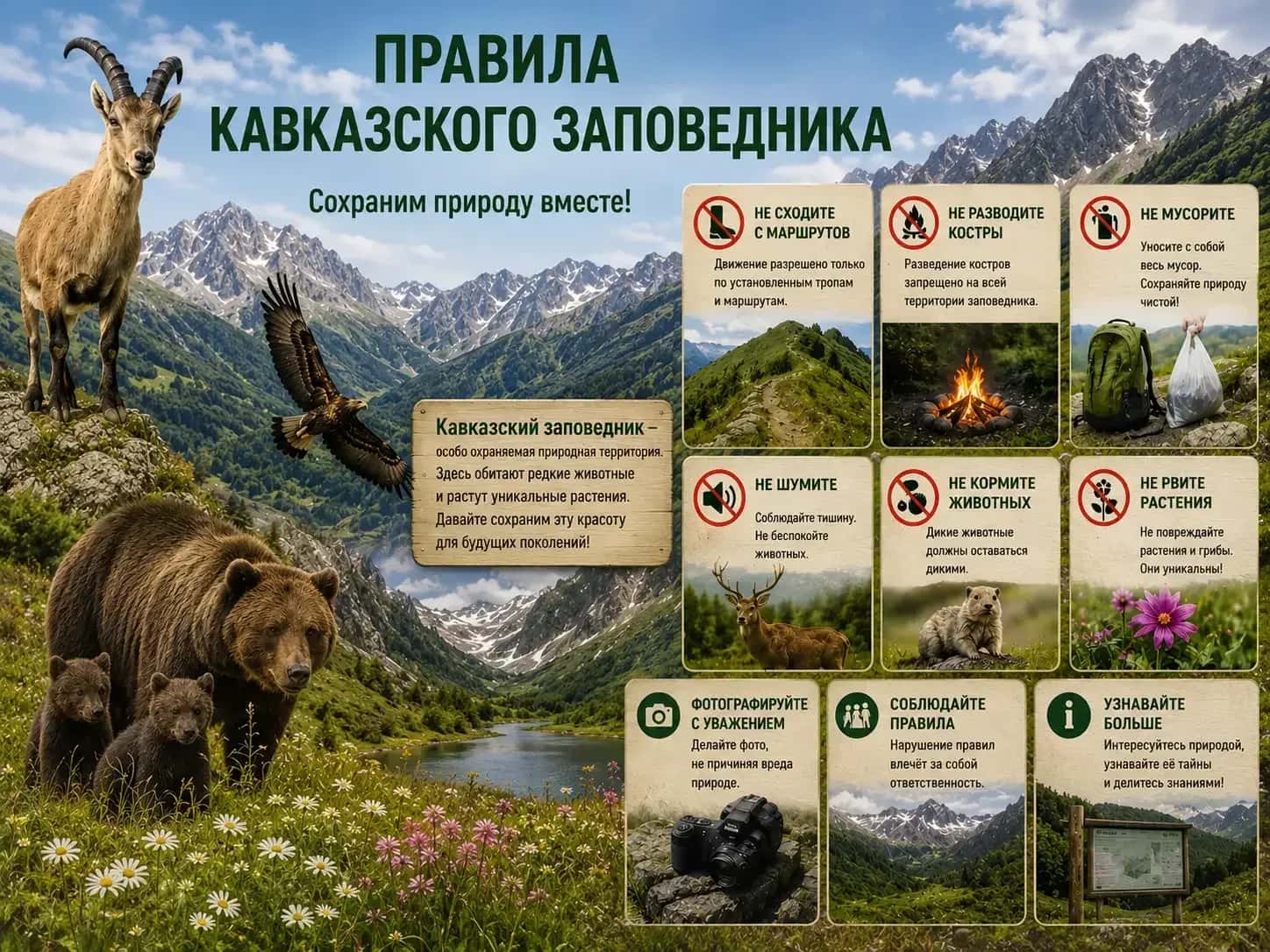
The rules are short. Do not pick or dig up plants - high-mountain species do not take to the lowlands, and the seed is needed by the meadow itself. Do not disturb the birds: keep away from nests and lekking grounds, for a disturbed golden eagle or bearded vulture may abandon its clutch. Stay on the trail - turf off the trail at this elevation takes years to recover.
And the reserve’s basic rule: no pets are allowed, and all rubbish is carried out with you. The full set is in the article on the reserve’s rules. They are not hard to keep - and it is precisely on this that it depends whether the protected species will still be at the cornice for the next visitors.
Category “3 - rare” in the Red Data Book does not mean “nearly extinct” - it means “the species is few in number and vulnerable.” The golden eagle, the bearded vulture and the grouse are not yet on the brink, but it is the reserve’s regime that keeps them in this status rather than a more alarming one. Protection works - and here every visitor is a part of it too.