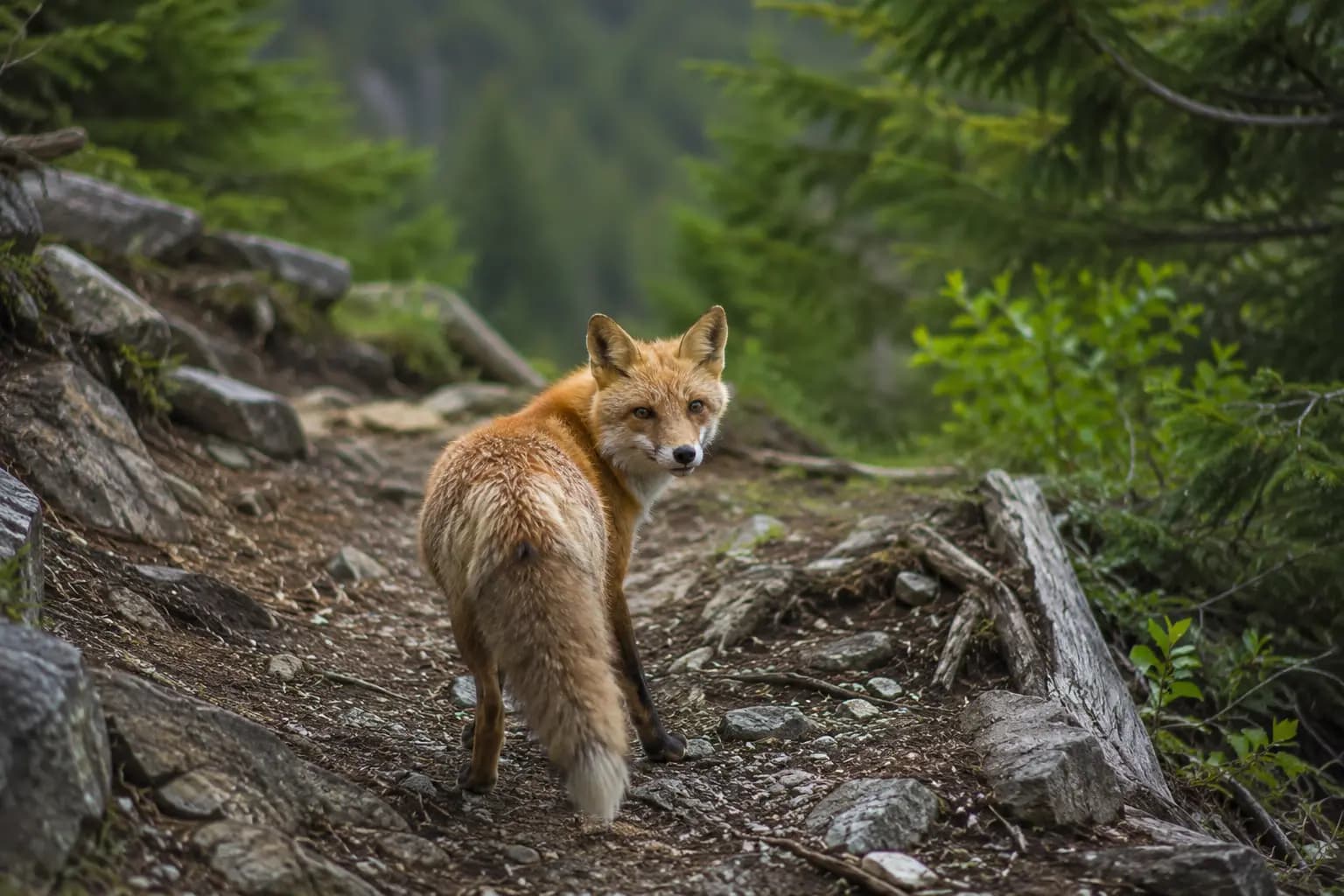
Come up to the Bzerpinsky cornice early on an August morning, and at the tent camp on the Bzerpi meadow you will almost certainly meet the local fox. She does not run. She stops about ten metres off, sits down and watches you - as though you were the visitor here. Which, on the whole, you are.
The red fox (Vulpes vulpes) lives right across the Caucasus - from the subtropics of Sochi up to alpine meadows at 2,500 m. On the cornice we see her reliably from June through mid-October. In winter she drops lower, down to the tree line.
Why foxes come out to people
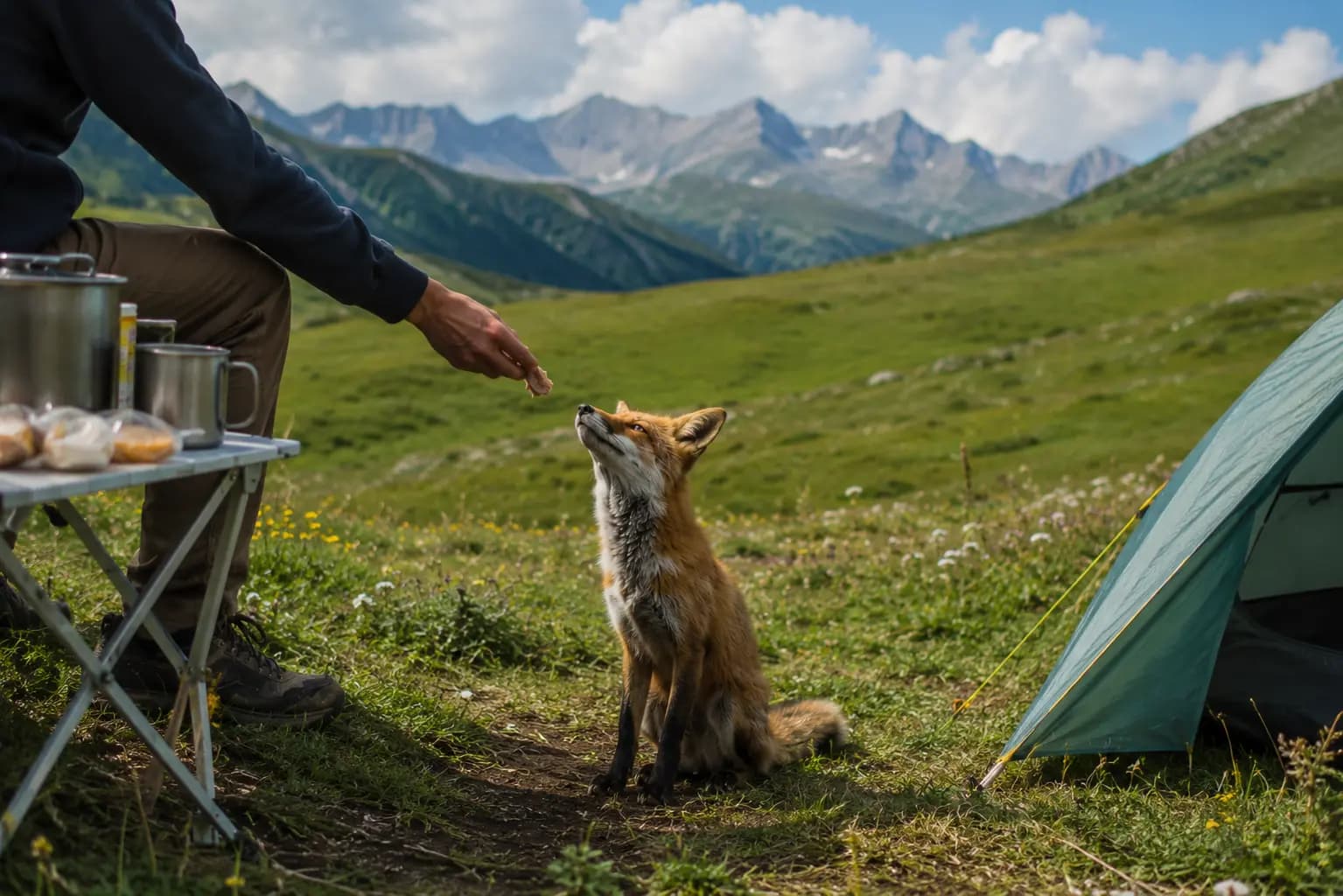
The simple answer: food. Hikers drop crumbs, toss away apple cores and bits of cheese, and the fox is an opportunist. She has learned to link the presence of people with an easy meal. That does not mean you should feed her - quite the opposite: feeding changes the animal's behaviour, and in the end it stops hunting for itself.
The complicated answer: in summer the cornice is full of mouse-like rodents, which is what the fox feeds on most of the time. A human is simply a new feature of the landscape. Curiosity wins out over caution, especially in young animals.
"A fox comes to the tents almost every morning and carries off whatever she can reach - often just for the fun of it."- field notes from the trail
A fox can run up to 50 km/h over short distances. But in the mountains she conserves her energy - her usual pace is around 5–7 km/h, about that of a fast-walking human.
What it eats at 2,000 m
The diet shifts sharply with the season. In June and July, when the meadows are in bloom, the staple is rodents: voles, mice, shrews. By August berries (bilberry, lingonberry) and mushrooms are added - yes, foxes eat them, mostly russulas.
By autumn it is carrion and a scavenging of whatever hikers have left behind. On average an adult eats around 700–1,000 g a day.
Beggar by day, backpack-raider by night
At the tent camp on Bzerpi the fox leads a double life. By day she moves openly among the hikers and "gathers the harvest": picking up crumbs, cadging a scrap, escorting groups along the trail. She lost her fear of people long ago - fed animals stay near the campsites from evening until morning.
And at night the real show begins. The fox tears into anything left outside or inside the tent: open tins, sausage, leftovers, rubbish. While she is at it she may drag off or shred a backpack, a boot, small belongings - often out of sheer curiosity rather than for food. Every morning the tents show the marks of this nightly "search".
Don't leave food in the tent or out in the open. Pack it into a sealed container and hang it under an awning, keep your backpack zipped, and don't drop any litter at all. Old hands even suggest leaving the tent slightly open - so a curious fox doesn't chew through the entrance to get at what's inside.
Quick quiz: foxes of the cornice

Can you go up to them?
No. This is a wild animal, and for all its outward trust it may be frightened or aggressive. On top of that, the fox is a potential carrier of disease - rabies, for example, which, though rare, does occur among wild foxes in the Caucasus.
The rule is simple: look, photograph, come no closer than 10 metres. Don't feed her, don't call her, don't try to "play". If a fox approaches you on her own - calmly step away.
If you want to see a fox
Go early - between 5 and 7 in the morning. The best months are July and August. The route is the standard one, from the Pikhtovy shelter along the trail to the cornice. Most often the foxes keep near the tent camp and along the edges of the trail, where there are both rodents and shrubs to hide in.
Noise scares them off. Walk quietly and your chances go up. Walk with a group, laughing loudly, and the fox will hear you 200 metres away and be gone. A guide usually knows where one was last seen and will lead you past the spot.
On the cornice the foxes have rivals - the pine marten (Martes martes) and the stoat. They hunt the same rodents, but are mostly active at night. If you set out at dawn and hear a rustle in the grass, it is unlikely to be a fox. More likely a marten heading home.