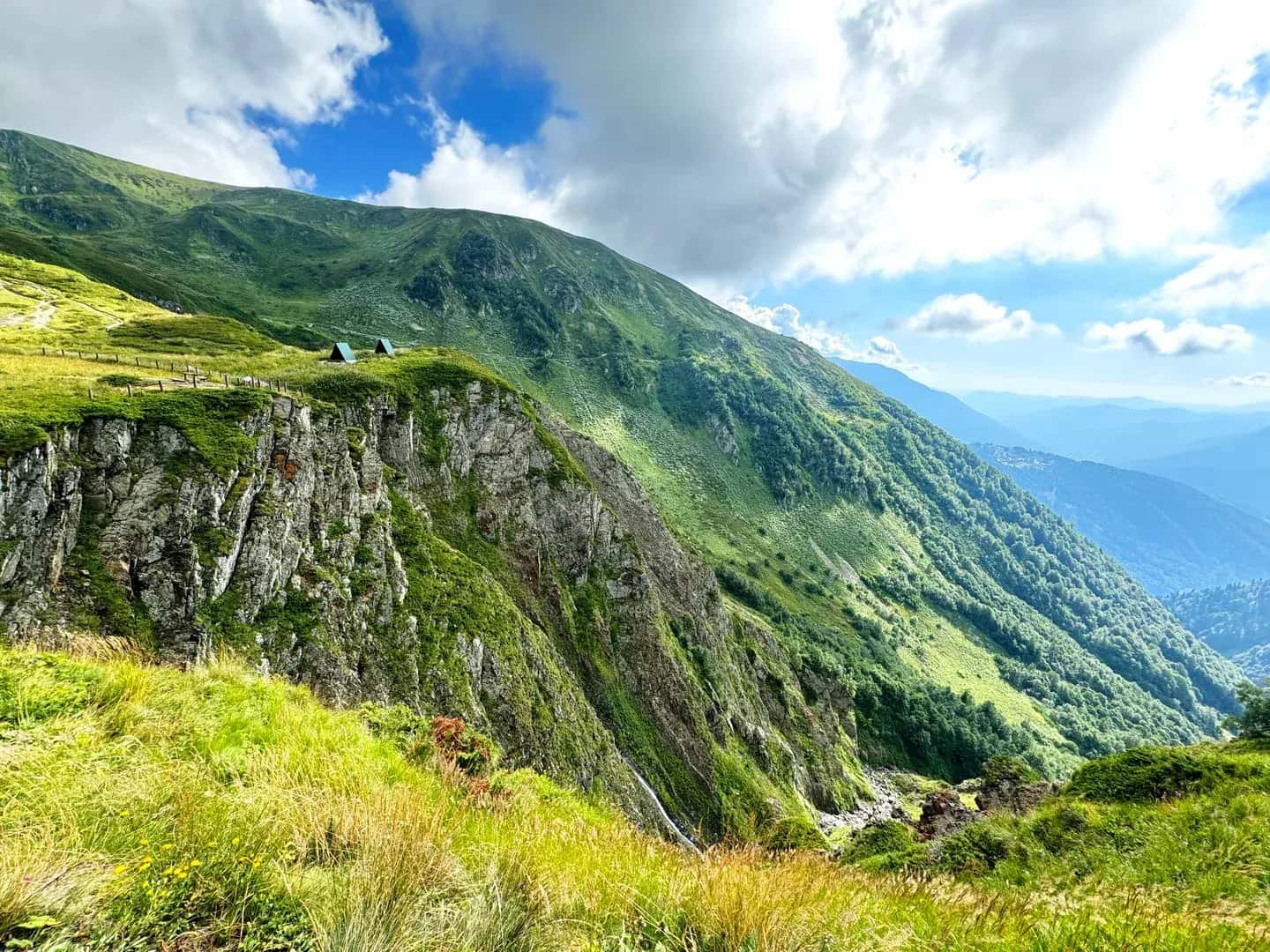
The most common beginner's question: "It's warm down below, why do I need a jacket?" The answer - because the cornice lives in a different climate. Between the valley and the cliff is only a couple of hours' walk, but more than a kilometre of altitude, and in the mountains altitude decides almost everything.
This article is about the mechanics: why it is the way it is. For the exact figures - temperature, wind, precipitation for the days ahead - see the cornice weather page with its live widget; we will not duplicate it here.
Why it is colder up top
The chief law of mountain climate: temperature falls with height. On average - by 0.6 °C every 100 metres of ascent. As it rises, the air thins, expands and cools.
Let us do a rough sum. From the lower cable-car station to the cornice the difference in height is more than 1,500 metres. By the "dry" model that's "minus 9 °C". But in the sun the meadows warm up: at +24 °C in Krasnaya Polyana the cornice is around +16 to +18 °C in shade and ~+20 in the sun. The sun/shade gap can reach 10°.
Thin air is not only colder but also poorer at blocking ultraviolet. At altitude you can burn easily even in cloudy weather and even in winter - sun protection is needed more up top than on the beach.
Valley +24, cornice +16 to +18
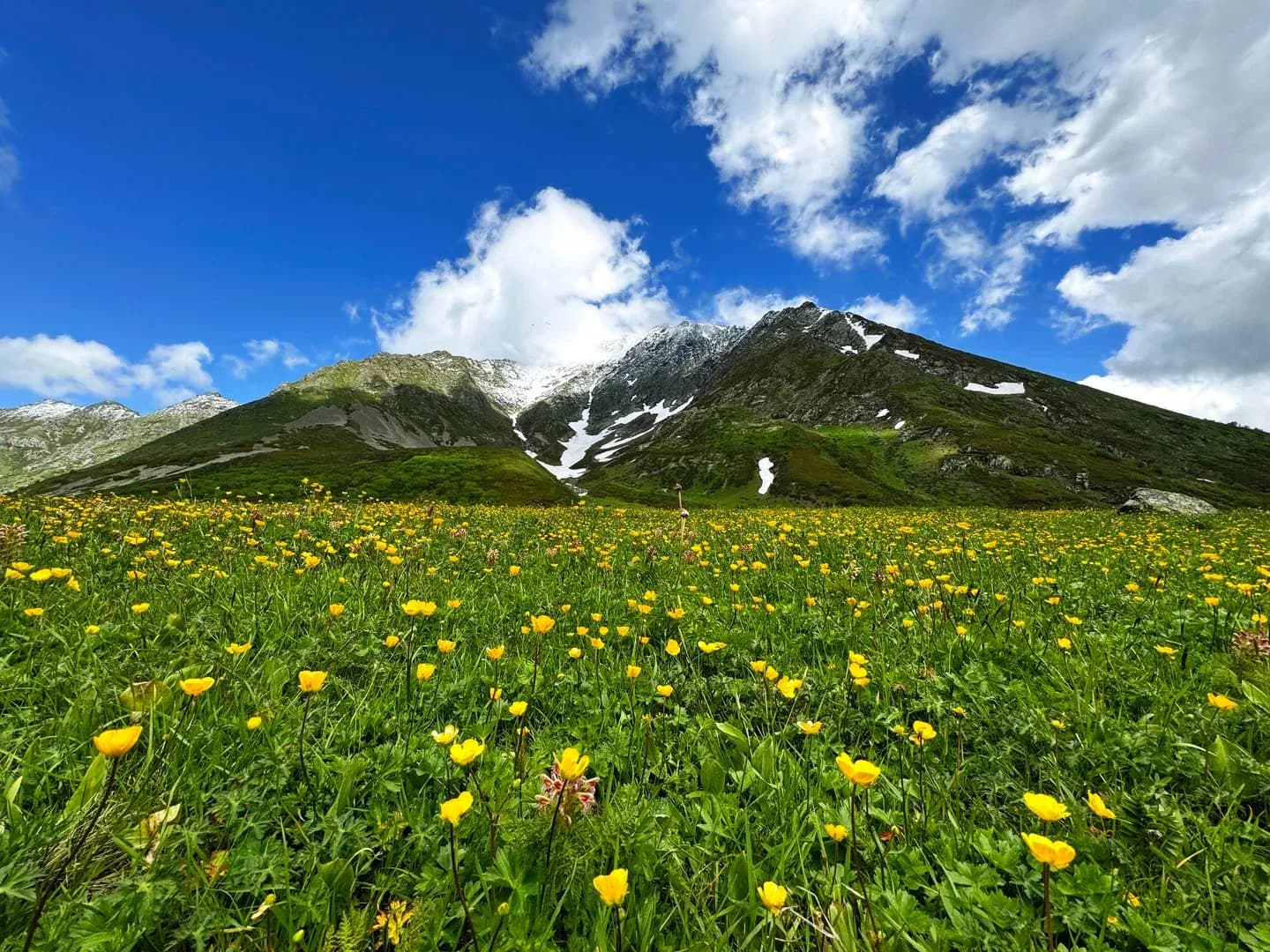
The contrast between the valley and the high country is a signature feature of these parts. Sochi lies in the subtropics by a warm sea, and the Mzymta valley heats up beautifully. Yet a couple of hours' climb away is the subalpine zone, where even in July the night can be near freezing, and snow patches in the hollows linger until mid-June.
Because of this the cornice is a place where summer and "almost winter" sit side by side. A hiker dressed "for the valley" gets cold up top and risks hypothermia. How to dress and what to bring is in the article on hazards and safety.
Where the cloud and fog come from
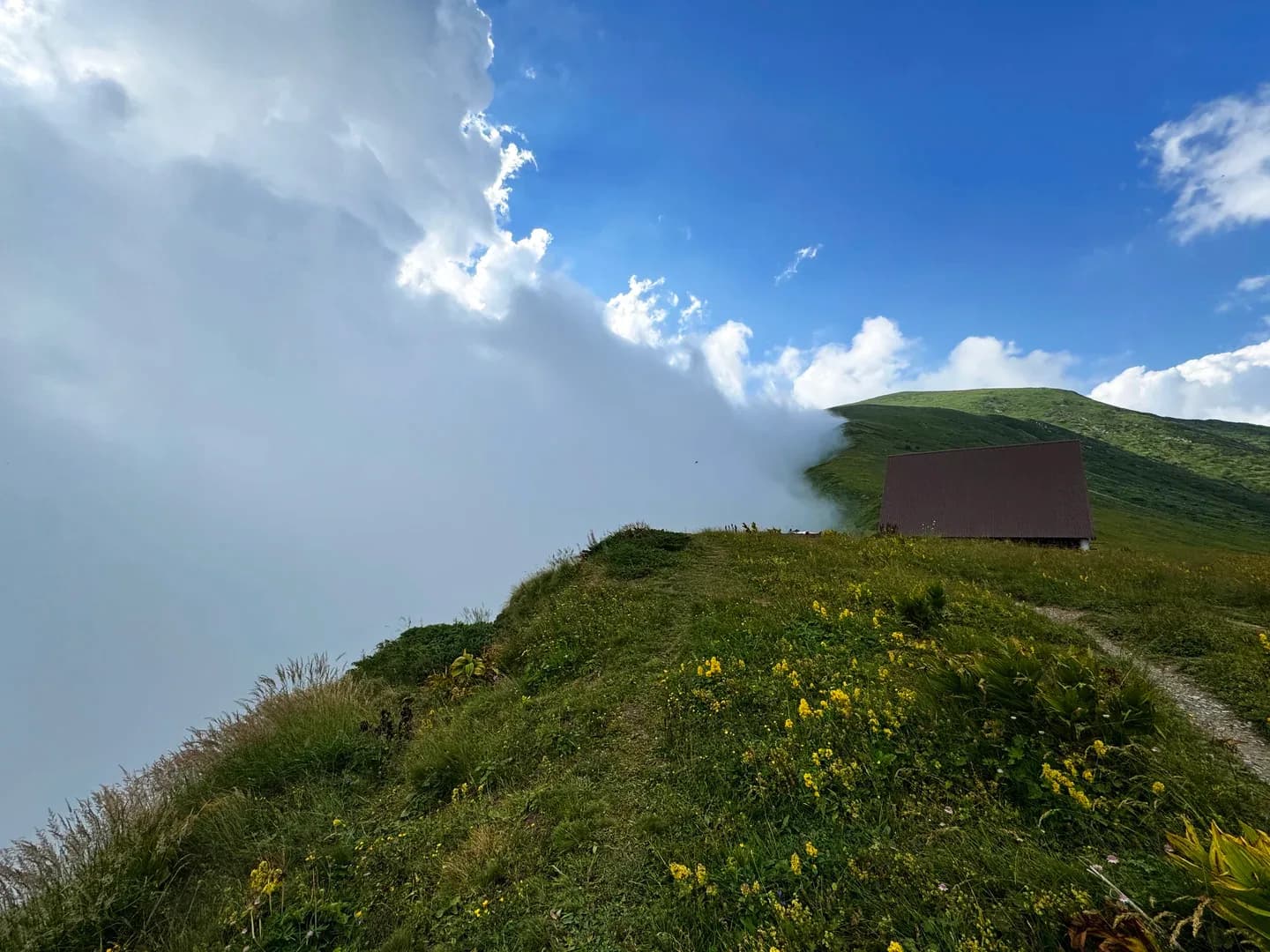
The cornice stands on the edge of a ridge, and ridges are natural "traps" for cloud. By day the slopes warm up, the warm moist air rises and at height cools to the point of condensation - and a cloud is born. That is why a clear morning so often gives way to a "cap" on the ridge by midday.
The same mechanism produces fog: the cloud literally settles onto the cornice, and visibility drops to a dozen metres within minutes. On a cliff this is doubly dangerous - so in fog you keep well back from the edge.
Quick quiz: weather at altitude

Afternoon thunderstorms
In summer, and especially in August, thunderstorm activity is added to all the above. Strong daytime heating and moist air "pump up" towering cumulus, and in the second half of the day it discharges as a storm. An open meadow and the edge of a cliff are the worst place to be in a storm: you become the highest point.
Hence the main rule of the season: set out early and be at the cornice in the first half of the day, and begin the descent around midday. The morning hours here are not only safer but also more beautiful - the air is clearer, the views go further.
Wind and inversions
On an open cliff there is almost always wind - it sharpens the sense of cold and can knock you off your feet right at the edge. And now and then the valleys see a temperature inversion: cold air stagnates below, and then up top, on the cornice, it can be warmer and clearer than in the cloud-bound valley. It is on days like these that the cliff gives the farthest views of all.
"Weather at altitude changes faster than a person can prepare for it: a clear morning is no guarantee of a clear day."- an observation, from material on high-mountain climate
Where to check the weather before setting out
Understanding the mechanics does not replace the forecast. Before every outing, check the current weather on the cornice: the live widget shows temperature, wind and precipitation. And how the climate and the crowds change from June to October is in the article on the seasons on the cornice.
The short conclusion: on the cornice it is colder, windier and more changeable than below, and this is not an anomaly but the norm of the high country. Dress in layers, set out early, keep time in hand - and the cornice's peculiar weather becomes not a problem but part of the experience.