If a hoofed animal flickers across a steep slope above the cornice, it is almost certainly one of two beasts: the Caucasian chamois or the West Caucasian tur. From a distance they are easy to mix up, but look closer and the difference is plain. Let us learn to tell them apart.
First, the main rule of the encounter: both animals are wild and wary, and seeing them is a piece of luck, not a given. You watch them from afar and through binoculars, without trying to approach. They will not let a human come close.
The chamois: light and rock-bound
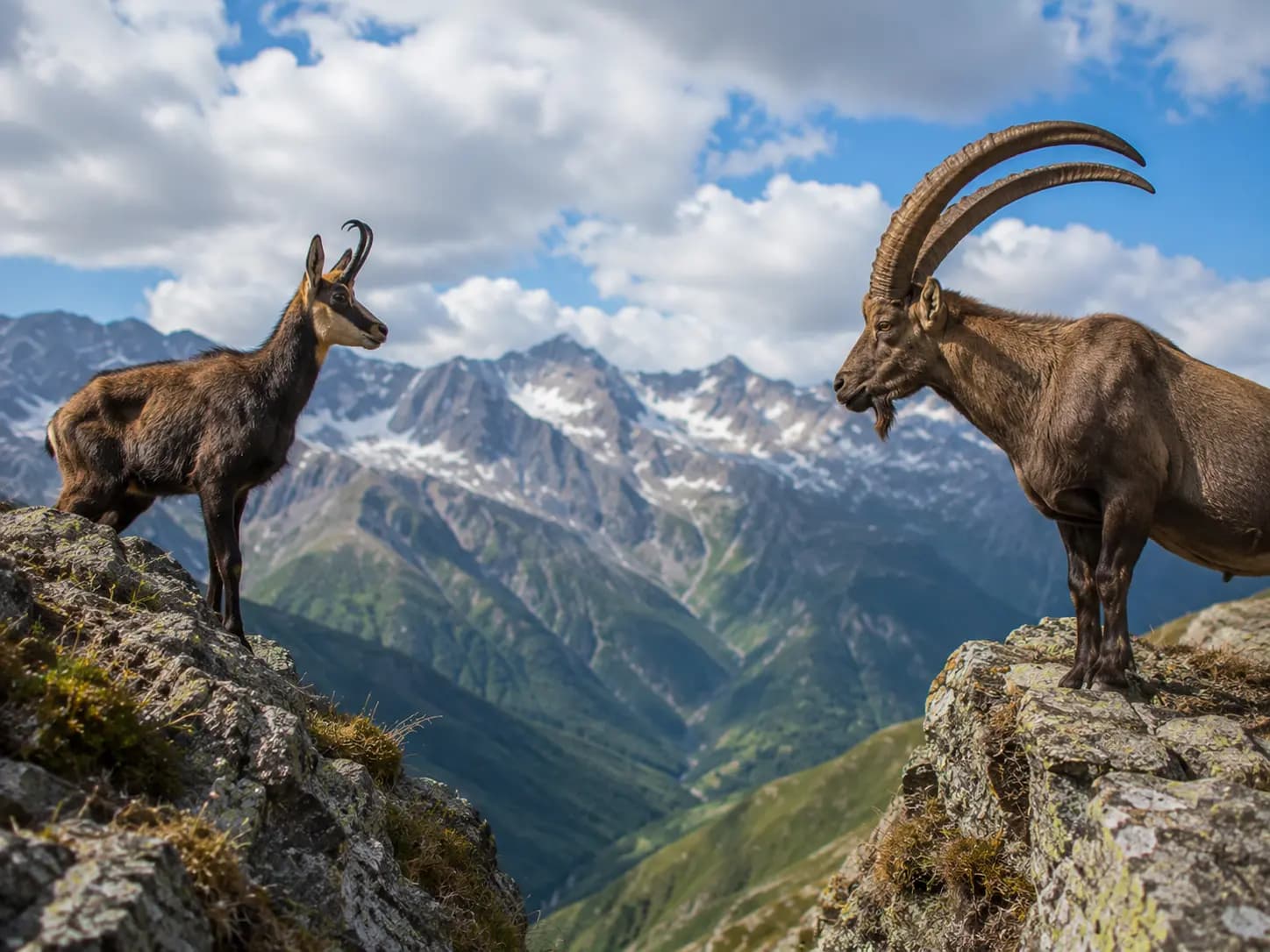
The Caucasian chamois (Rupicapra rupicapra caucasica) is small and graceful: 20–35 kg, just 60–75 cm at the shoulder. Its horns are short and slender, hooked at the tips, and - an important detail - present in both sexes. The memorable feature is the "mask": a pale face with dark stripes running through the eyes.
The chamois is a master of rock. It keeps to rocky slopes broken by patches of forest, and shelters in rock outcrops with ledges and niches - the very cliffs along which it moves as though it had never heard of gravity. It lives from the coast up to about 3,000 m.
The chamois population of the Caucasus Reserve is about 1,500 animals in 16 local groups - the largest in the whole Caucasus. So this is where your chance of seeing a chamois is higher than almost anywhere else in Russia.
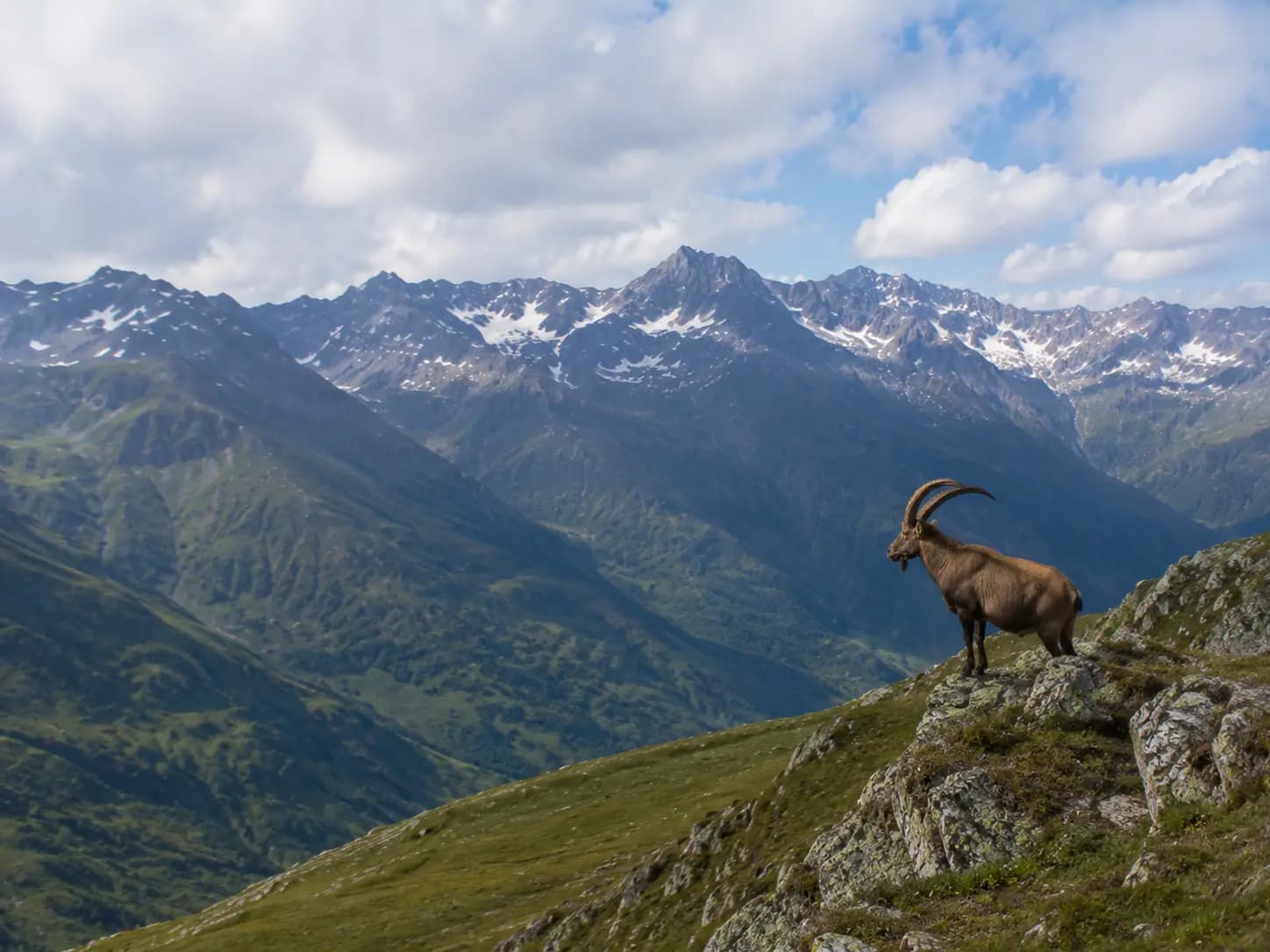
The tur: heavy and high-living
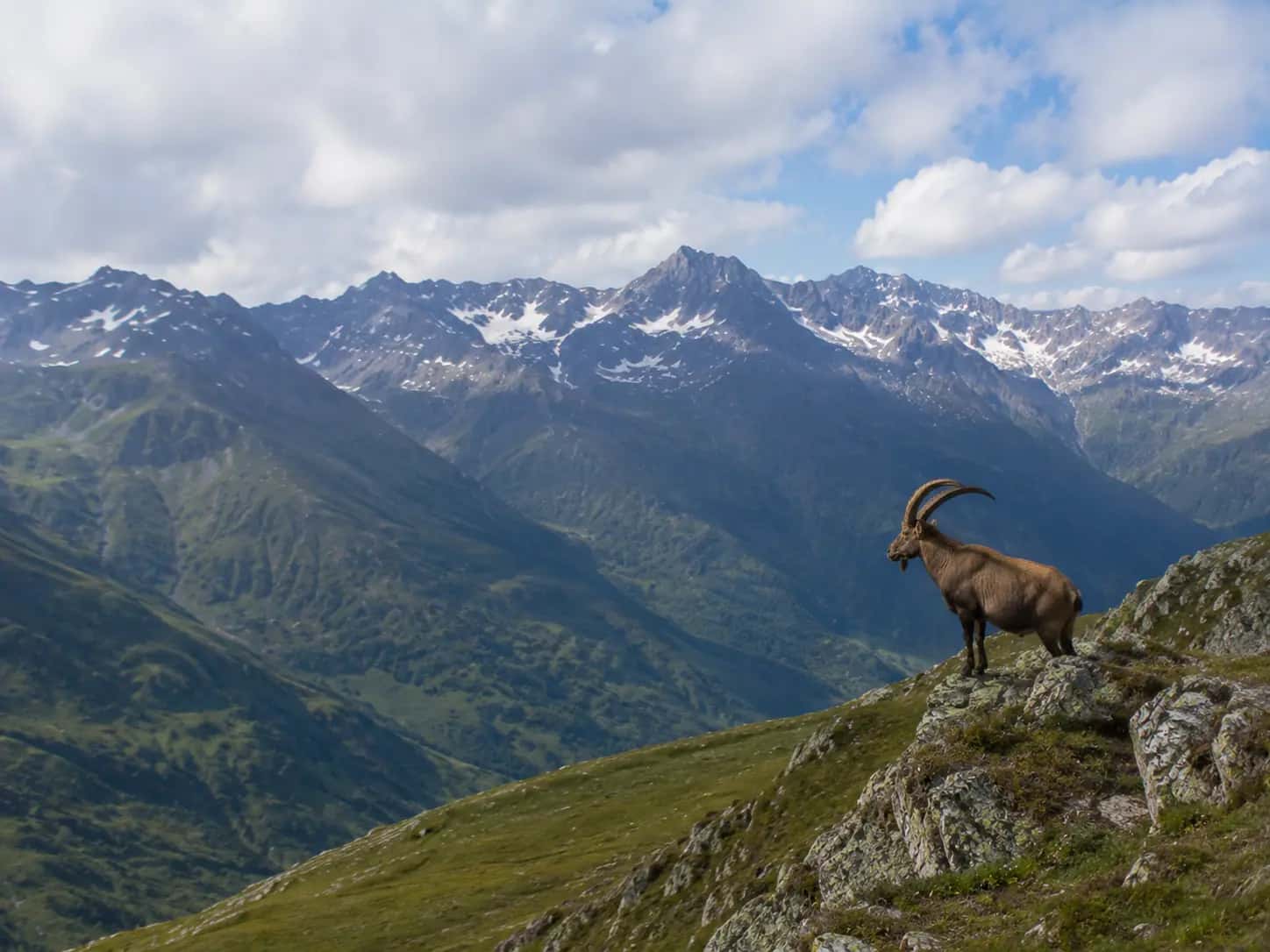
The West Caucasian (Kuban) tur (Capra caucasica) is an altogether different calibre. Males reach 65–100 kg, with a body up to 150–165 cm long. Its chief adornment is a set of massive sabre-shaped horns up to 75 cm and a short, broad beard. In summer the coat is reddish-brown, in winter grey-brown.
The tur climbs higher than the chamois - it is found at elevations from 800 up to 4,200 m. In summer the turs graze alone or in small groups of 10–15 head, more often on northern slopes and near glaciers, where it is cooler. By autumn and winter they gather into large herds - sometimes hundreds of animals - and move to southern slopes, where there is less snow.
Quick quiz: chamois and tur

How to tell them apart at a glance
A quick cheat sheet for when you meet one:
Size. Small and light, "like a roe deer" - chamois. Large and solid, "like a proper mountain goat" - tur.
Horns. Short hooks - chamois. Long curved sabres - tur (a female tur's horns are noticeably more modest, but still larger than a chamois's).
Face. A pale "mask" with dark stripes through the eye is a sure sign of the chamois. Where. On cliffs and crags with forest lower down - more likely a chamois; high up, near glaciers and out on open meadows in a herd - more likely a tur.
What they do and what they eat
The life of these hoofed animals follows the rhythm of grazing. The chamois has two activity peaks - morning and evening, and rests in the shade of the rocks through the day. Its menu runs to more than 200 plant species: grasses and seeds in summer, berries and acorns in autumn, shoots and buds in winter. The tur keeps to a similar routine, roaming after fresh grass across the slopes and elevations.
"Their life runs along quite serenely and steadily: two peaks of grazing activity - morning and evening."- Caucasus Nature Reserve, on the Caucasian chamois
Where to look from the cornice
The best time is early morning, while the animals are grazing and the air is clear. Scan the rocky slopes and scree in the distance with binoculars: look for the chamois on cliffs and rock shelves, and the tur higher up, nearer the snowfields and ridges. Stillness and quiet help: on hearing a group of people, these animals are the first to leave.
And remember the whistle: a sharp sound from the slope is an alarm call the animal gives to its fellows. It means you have been spotted, and you will be admiring them only as they go. Who else lives at these elevations is in the general wildlife overview and in the article on the birds of the cornice.